

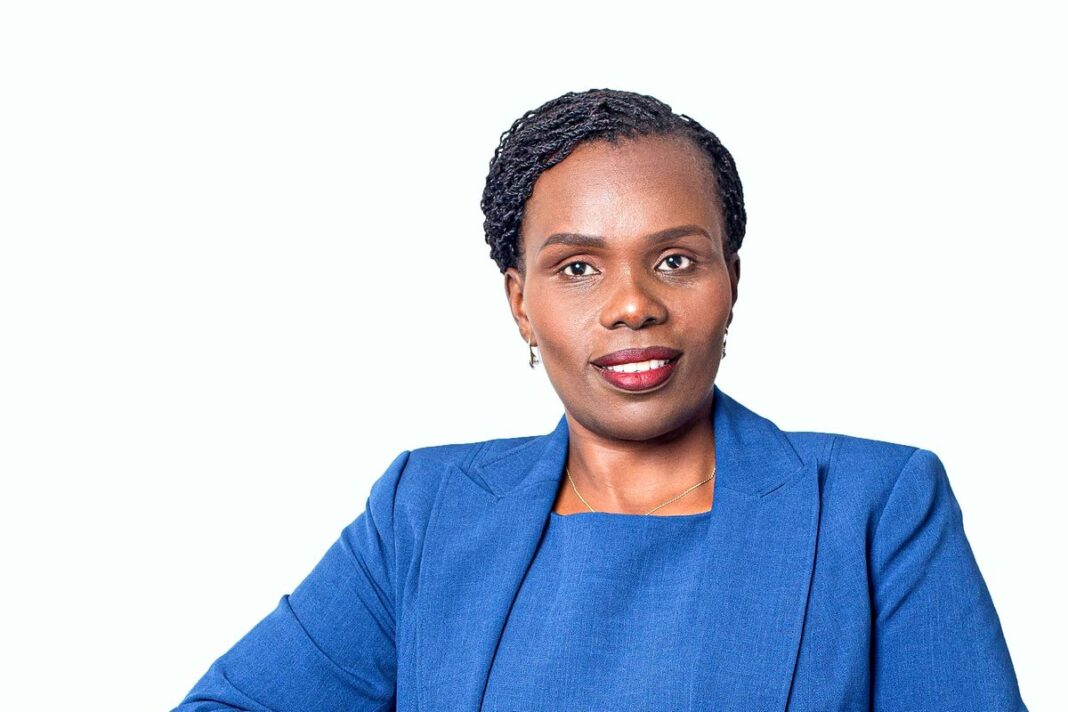
Maybe you have wondered if you will ever meet someone from Olenguruone, way out on the edge of the Mau Forest. Maybe you haven’t. Maybe you know it only as the name of a road connecting Nairobi’s Kileleshwa and Lavington. Then you meet Carol Koech, the vice president for Africa at the Global Energy Alliance for People and Planet.
“I watched the forest recede,” she recalls.
She also watched cabbages planted in acres rot for lack of a market. Milk spoiled because there was no cold storage. Hard work went unrewarded because one crucial link was missing. She calls it energy poverty.
Decades later, Koech found herself in Lagos, Nigeria on an assignment for General Electric, helping Nigeria build power plants. She would go on to become Country President for Schneider Electric East Africa, the first Kenyan woman to lead a multinational energy company in the region. Yet even as she travelled across the continent, negotiated major energy deals and visited project sites under armed escort, one thought kept nagging at her.
“My mother was still living in the dark,” she says. “She had no electricity.”
There she was, helping build the infrastructure that powered economies, while back home, the woman who had raised her remained disconnected from it. Something about that gap — between the scale of the work she was doing and the village she had left behind — refused to let her settle.
So she began paying attention differently. Slowly, she started moving her career toward the people in the dark.
Today, Koech leads the Africa operations of an alliance founded during COP26 by the Rockefeller Foundation, the IKEA Foundation and the Bezos Earth Fund, with a mandate to end energy poverty across the continent. Through an initiative called Point One, she is also urging corporations to commit 0.1 percent of their revenue to development work. Not charity, she insists, development.
“I belong to the corporate world,” she says. “I’ve been there for years. But now I’m on this side, and I can see exactly how corporates can plug in.”
Olenguruone, it turns out, was never just where she came from. It was always where she was going.
Isn’t it ironic that you work your way up to a nice office like this, with a great skyline of the city, but then barely notice it?
I know. My day is usually so busy, I have no time to appreciate this view. I’m rarely still – if I’m not on calls, I’m on a plane somewhere. When I came here for the first time, I remember thinking, ‘this would be a good place to think.’ Ha! People look at this and think it must be a privilege – a corner office on the ninth floor. But I have very little attachment to things like this. I’m much more mission-driven. I could just as easily work from that house over there, as long as I’m doing work that feels meaningful.
But surely, it must feel good.
(Shrugs) I feel like I’ve gone through the phases of getting attached to stuff and privilege. Those things don’t excite me anymore.
When was the turnaround?
I have no idea. But I think, over the years, once you realise these things are within reach, they stop being the things that define you or give meaning to your life.
What’s the meaning to your life?
The work I do is really what makes me want to wake up. The job is quite demanding, but just the thought that it’s going to make a difference in someone’s life makes me want to do it more and more. For me, energy poverty is personal.

Carol Koech, Vice President for Africa at the Global Energy Alliance for People and Planet.
Photo credit: Pool
I worked in the corporate world for more than 20 years, much of it in the energy sector, helping countries build power plants across the continent. At the same time, my mother, who lives in the village, had no electricity.
I would travel to Nigeria, with front and back escorts taking me to remote project sites, and I’d think about her. There I was, sitting in big rooms and negotiating big contracts, yet my mother was still in the dark.
That was when I started shifting my career toward solving it. This role feels like the culmination of that path.
Anything interesting happened in your childhood?
No, but my name should be interesting to you. People don’t realise it’s a Kenyan name – it almost always passes for a German one. In Germany, Carol is also a man’s name, so every time I show up somewhere outside Kenya, people are expecting a German man. Koech is Koch in Germany.
I’ve spent most of my career in a male-dominated industry, so when I arrive for an energy conversation, and people see the name, they make assumptions about my gender. Almost 90 percent of the time, people ask me how to pronounce it.
So, a normal childhood…
(Laughs) (Laughs) I grew up in Olenguruone, on the edge of the Mau Forest. Life revolved around school and chores. By the time I was 10, I could milk cows, carry milk to the dairy, and fetch water from the river. That’s how we grew up – multitasking, solving problems, working hard.
What stayed with me was how often that hard work went to waste. Acres of cabbage planted, no market. Milk tasted of cabbage. The milk truck couldn’t reach us when the roads were bad, and when the milk spoiled in transit, it came back the next day. You could do everything right and still earn nothing.
If we’d had reliable energy and cold storage nearby, much of that wouldn’t have happened. I saw firsthand how one missing piece of infrastructure could undo months of hard work.
What would you very quickly want to forget about your childhood?
What would I want to forget? Honestly, nothing. I enjoyed growing up where I did. In fact, I’m very proud of where I come from and where I am today. When I look at the journey, it’s been a very long path.
Would you describe it as a success?
(Pause) I think it’s just…I don’t know what you define as success. I would say I’m happy.
How come you people – business leaders, industry captains – are always so hesitant to claim success? Is it humility or the finality of success?
(Pause) Look, success is different for me. I’ve made a significant career shift. I was a CEO in the corporate world, and now I work in development. To many people, it looked like career suicide. But even when I was leading Schneider Electric and living in Dubai, I kept thinking about that woman in the village.

Carol Koech, Vice President for Africa at the Global Energy Alliance for People and Planet.
Photo credit: Pool
Once I understood how decisions are made, I felt there was nobody better placed to speak for people like her than someone who had lived that life. You sit at these development tables and realise that people mean well, but they don’t always understand the problems they’re trying to solve. Rural communities are not defined by a lack of effort or ambition. Too often, their hard work goes to waste because critical gaps still exist.
So, you are solving the world’s problems. What personal problems are you solving?
I don’t know. Maybe I’m trying to solve the poverty I grew up around. I don’t want to call it a disadvantage, but I grew up in a place with very low levels of development and came to realise that people’s lives can change dramatically when a few key things are put in place. Perhaps that’s what I’m solving for. I’ve never really thought about the question that way, so I’d probably need more time to answer it properly.
What are some of the preconceptions about the development world you are shedding off?
I assumed people in the development world weren’t as busy as those in corporate, and that there was less clarity and less innovation. Coming into this space has completely challenged that. The work is demanding, and there’s significant innovation here – not always product innovation, but innovation around solving real-life problems and building partnerships.
The other big shift is how the development world approaches problems from a much broader perspective. In corporate, you’re focused on a specific business objective. Here, you’re forced to think about systems and the bigger picture.
When do you stop to smell the flowers?
I used to do a lot more hiking when I had the time. These days, I have a fairly serious morning routine. Sleep is non-negotiable – in bed by 10pm, up by 5:30am. Before I leave the house, I’ve taken care of my physical, mental and spiritual well-being. I journal, meditate, pray and spend time in silence.
Over the years, I’ve learned the importance of being present – of allowing my mind to become quiet instead of constantly racing ahead. I sit with my thoughts, observe them, acknowledge them and let them pass. That practice has helped me stay calm even in difficult situations. When crises come, I don’t panic easily because I’ve learned how to anchor myself.
Care to share these personal challenges, if that’s okay?
I’ve had to care for both my father and my mother-in-law through cancer. My father’s journey lasted three and a half years before he died. I then cared for my mother-in-law for two years, and she died in my house.
Experiences like that change you. They make you see life very differently. The things you consider important shift. When you’re caring for someone who is dying, and there’s nothing you can do to stop it, it takes you to a different level of emotional pain. It stretches your emotional threshold in ways you can’t fully understand until you’ve lived through it.
I have a terrible question. What do you remember about your dad’s final moment?
A year after my father died, I was on a flight from Lagos to Nairobi, watching a film about cancer. By the end of it, my grief surfaced. I wrote him a long letter and cried through the entire flight. When I landed, I felt as though I had finally grieved.

Carol Koech, Vice President for Africa at the Global Energy Alliance for People and Planet.
Photo credit: Pool
During his illness and after his death, I had been in project-management mode – making decisions, managing treatment, organising the funeral. I don’t think I had given myself time to process it.
My father had throat cancer. After it returned, he could no longer eat and needed a stent. I remember him talking about how much he missed potatoes. I took a photograph of him in his hospital bed that day. It was the last picture I ever took of him. He died the following day. We were very close, and I had been part of his recovery from alcoholism for many years before he died.
How did his death change you?
I see life from a very pragmatic perspective now. Pain is a season – you adjust, adapt, and eventually it passes. But every death takes a piece of you with it. After my mother-in-law died, I felt something in my capacity for empathy had changed.
I could see someone going through pain and think, you’ll be okay, rather than feeling overwhelmed by their suffering. Caring for her was especially difficult because it coincided with my promotion to CEO. She was diagnosed in 2020 and spent much of that period in my care.
What people don’t always realise is that caregiving isn’t only about the patient – it’s also about managing everyone around them. There were mornings when relatives would arrive in a Probox unannounced, (laughs) just as I was preparing for leadership meetings. It was a lot to carry at once.
What does your husband find so frustrating about you?
(Laughs) He’d probably say I’m untameable. Once I’ve decided to go after something, I just can’t stop. My husband has been incredibly supportive of my career throughout. He worked in banking and now manages various interests – real estate, farming. These days he’s also the more present parent, since our youngest son is only 12.
If there’s one thing he probably finds difficult about me, it’s that once I’ve decided to pursue something, I don’t know how to stop. When I commit to something, I feel compelled to see it through to the end.
What’s your first identity?
I’m all those things – mother, wife, CEO – but first and foremost, I see myself as a person with a purpose. Raising my children is a very important part of my life, but I also know that parenting is a season. I can already see the empty nest on the horizon.
My mother devoted herself completely to raising us, and honestly, I’m not even a quarter of the parent she was. Sometimes I feel I haven’t been a very good student of hers. But at the same time, I also feel that I’m more than that. I’m more than the biological responsibilities I’ve been given.
What do you really suck at?
I struggle with small talk.
As I’ve gotten older, I’ve found it harder to maintain certain friendships because I’m not very good at conversations that revolve around other people. I genuinely can’t retain gossip; my brain just doesn’t seem to have space for it. Because of that, maintaining certain friendships can be difficult, especially friendships that were built around convenience rather than shared purpose.